
When it comes to decorating your windows, one of the most common questions homeowners face is:
Should I use blinds or curtains?
Both window treatments have their unique charm, functionality, and benefits. Choosing the right one depends on your space, style, privacy needs, light control, and budget. In this guide, we’ll break down the differences between blinds and curtains, highlight where each works best, and help you make smart choices for every room in your home.
1. Blinds vs Curtains – Key Differences
Before diving into room-by-room recommendations, let’s understand how blinds and curtains differ in function and design:
| Feature | Blinds | Curtains |
|---|---|---|
| Material | Typically made from wood, faux wood, aluminum, or fabric | Usually fabric — sheer, linen, velvet, blackout, etc. |
| Light Control | Excellent — adjustable slats allow precise light control | Good — depends on fabric thickness and layering |
| Privacy | High — adjustable angles let you maintain privacy while letting light in | Moderate to high — depends on fabric and lining |
| Maintenance | Easier to clean (dusting, vacuuming) | Requires washing/dry cleaning |
| Space | Compact, fits within window frame | Takes up more wall/floor space |
| Style | Modern, minimal, sleek | Soft, classic, elegant |
| Installation | Usually inside window frame | Mounted above or beside the window |
Blinds are often chosen for practicality and modern looks, while curtains are popular for their softness, insulation, and decorative appeal.
2. Bedrooms: Prioritize Privacy and Light Blocking
For bedrooms, privacy and light control are key. Both blinds and curtains can work here, but the choice depends on the desired ambiance:
-
Blinds:
-
Blackout roller blinds or honeycomb blinds provide excellent privacy and block light effectively.
-
Motorized blinds are a great addition for convenience — open them automatically in the morning and close at night.
-
They’re ideal for small bedrooms where space is limited.
-
-
Curtains:
-
Blackout curtains are perfect for total darkness, especially for light sleepers.
-
Floor-to-ceiling curtains add elegance and can make the room feel taller and cozier.
-
Layering sheer curtains underneath allows flexibility — natural light during the day, privacy at night.
-
Best Choice: A combination works beautifully — install blinds for function and layer them with curtains for style and insulation.
3. Living Rooms: Style Meets Versatility
The living room is where you entertain guests and spend most of your time, so the window treatments should balance aesthetics, flexibility, and light control.
-
Blinds:
-
Zebra (day & night) blinds or sheer roller blinds are popular for living rooms.
-
They allow soft filtered light while maintaining privacy.
-
They suit modern, minimalist interiors and are easy to maintain.
-
-
Curtains:
-
Sheer curtains create a light, airy atmosphere during the day.
-
Layered curtains (sheer + heavy drapes) provide insulation and elegance.
-
Ideal for formal or classic décor styles.
-
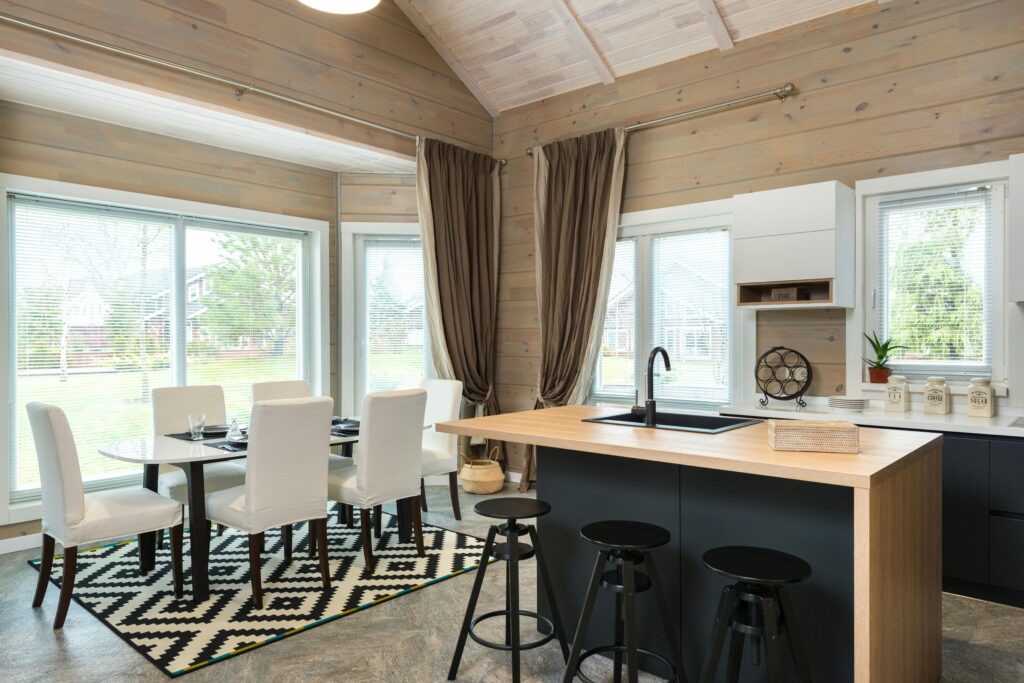
Best Choice: Curtains often take center stage in living rooms for their decorative value, but pairing them with neutral blinds gives you the best of both worlds — function and beauty.
4. Kitchens: Easy Maintenance is Key
Kitchens require window coverings that can withstand moisture, grease, and frequent cleaning. This is where blinds outperform curtains.
-
Blinds:
-
Faux wood or aluminum blinds are moisture-resistant and easy to wipe clean.
-
Roller blinds with washable fabric are also great.
-
Their compact design fits well over sinks and counters.
-
-
Curtains:
-
Fabric curtains can absorb cooking smells, stains, and moisture.
-
They may work for windows far away from the stove but require more frequent washing.
-
Best Choice: Blinds — they’re more practical and hygienic in kitchen environments.
5. Bathrooms: Moisture-Resistant Solutions
Bathrooms need privacy, moisture resistance, and easy cleaning. Heavy curtains are not suitable here.
-
Blinds:
-
Faux wood and PVC blinds are ideal — they resist humidity and are easy to maintain.
-
Honeycomb blinds work well for insulation in cold climates.
-
Motorized options are useful for high windows or added convenience.
-
-
Curtains:
-
Fabric curtains can retain moisture and develop mold or mildew if not cared for properly.
-
They’re rarely used in bathrooms except as decorative panels away from water sources.
-
Best Choice: Blinds win hands down for bathrooms.
6. Home Offices: Focus & Light Control
In a home office, light control and glare reduction are essential for productivity.
-
Blinds:
-
Roller blinds, vertical blinds, or zebra blinds are perfect — they allow you to control the amount of light entering the space.
-
Neutral tones maintain a professional look.
-
Easy to maintain with minimal space usage.
-
-
Curtains:
-
Can work if you prefer a softer look or want sound absorption.
-
Heavier fabrics can help insulate the room but may feel bulky.
-
Best Choice: Blinds are typically more practical for home offices, especially for computer work.
Conclusion: Use Each Where It Shines
There’s no one-size-fits-all answer in the blinds vs curtains debate. The best choice depends on the function of each room, your style preferences, and maintenance needs.
-
Blinds are ideal for moisture-prone areas, small spaces, and modern designs.
-
Curtains add softness, luxury, and insulation in living rooms and bedrooms.
-
Combining both often gives you the best overall result.